Epoxy Flake Garage Floor Systems — How Broadcast Actually Works
What a Broadcast Layer Actually Does
Why Broadcast Density Matters More in This Region
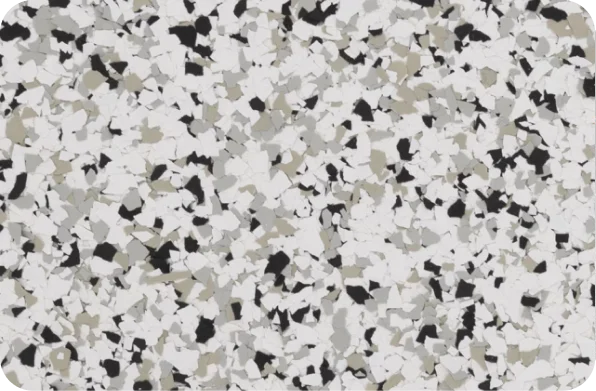
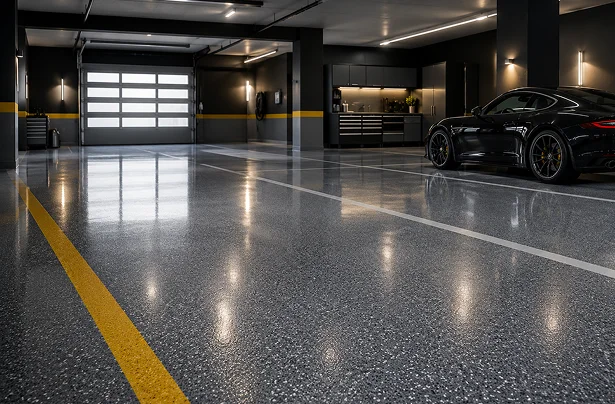
A quartz or flake broadcast is applied into the wet base coat before the topcoat goes down, embedding the aggregate directly into the coating rather than sitting on top of it as a decorative layer alone. That placement matters more than it might seem - the broadcast becomes part of the floor's structural surface, adding texture that improves slip resistance and a degree of impact tolerance that a flat, single-color coating doesn't offer on its own. The topcoat then locks everything in place, sealing the aggregate permanently into a smooth, durable finish.
Chicago garages, basements, and commercial floors deal with tracked-in snow, slush, and moisture for a significant part of the year, which makes slip resistance a functional requirement here rather than a nice-to-have. A flat epoxy or polyaspartic coating becomes noticeably more hazardous underfoot the moment it's wet, while a properly broadcast surface maintains traction even with snowmelt or spilled liquid sitting on top of it. This is exactly why we adjust broadcast density based on how a space actually gets used - a garage that sees winter vehicle traffic needs a heavier broadcast than a low-traffic basement storage area.
The seasonal wear pattern in this climate also makes broadcast durability a practical consideration, not just an aesthetic one. Road salt, grit, and repeated freeze-thaw cycling all interact with a coated floor's surface over time, and a properly embedded aggregate broadcast resists the wear patterns and dulling that a flat color coat can show in high-traffic areas within just a few seasons.





 847-770-5278