Epoxy Basement Floor Coating
Why It's Different From Any Other Room
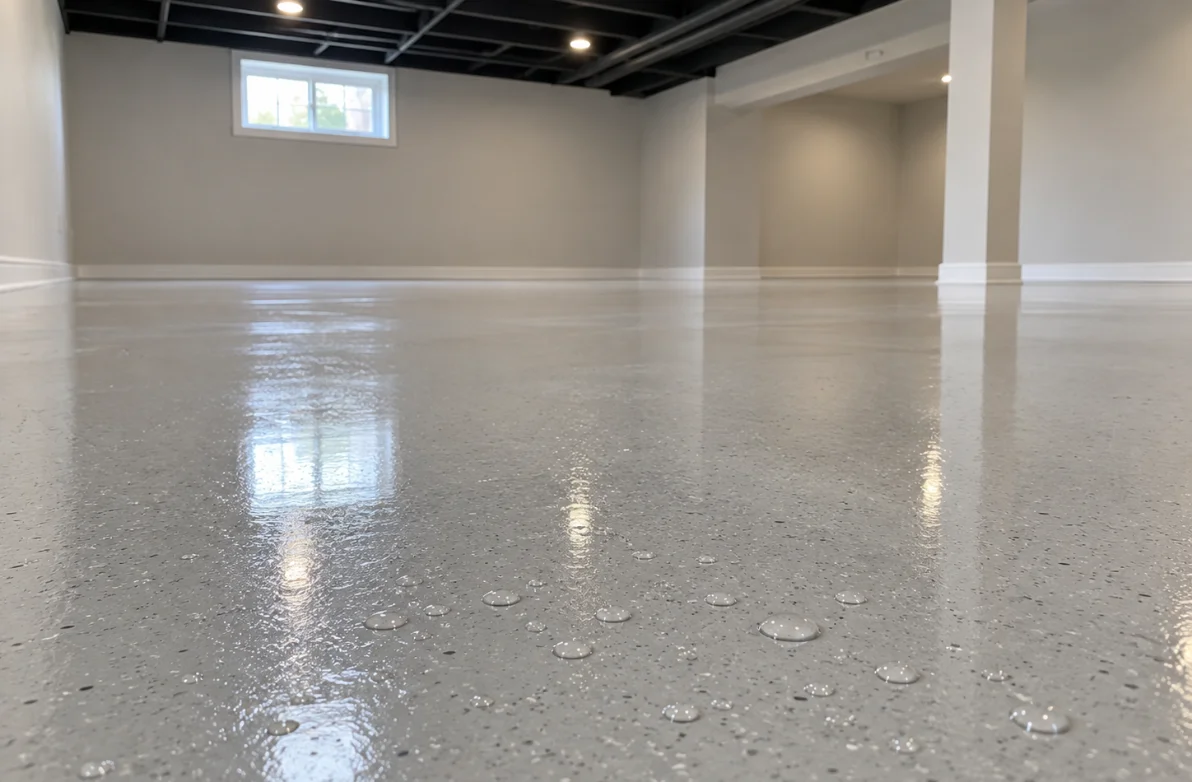
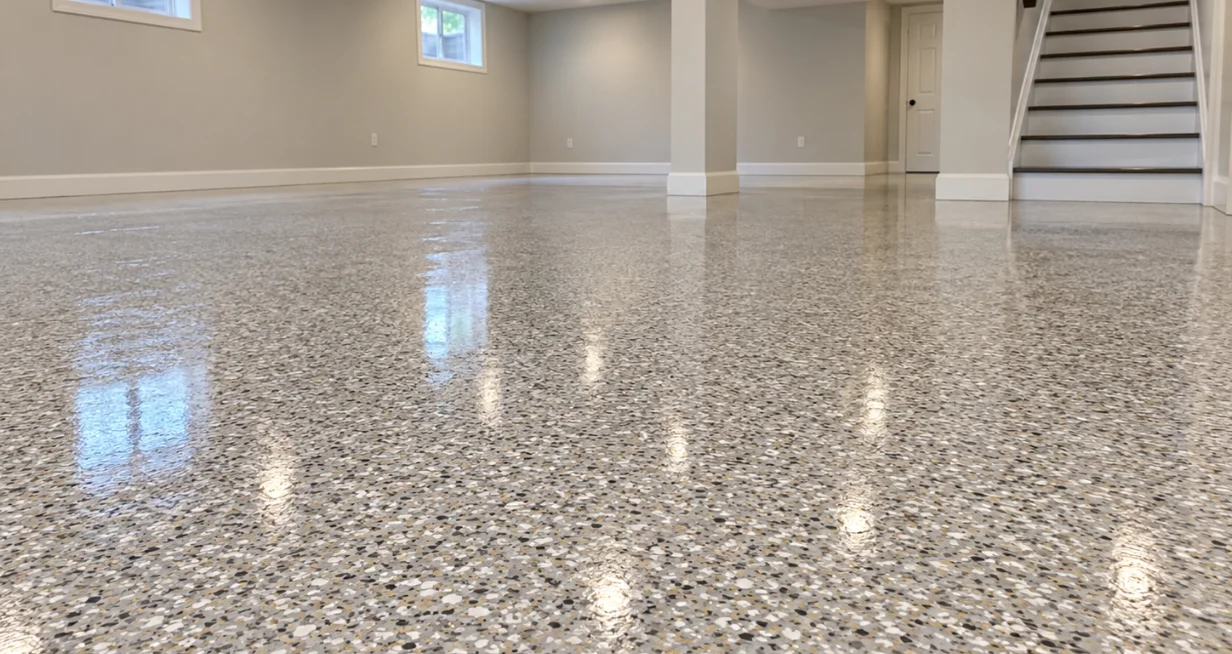
An epoxy basement floor is not the same project as coating a garage or a patio, even though the materials look similar on a spec sheet. Garages drain to the outside and patios dry out in open air; basements sit below grade, surrounded on every side by soil that holds groundwater against the foundation walls and slab. That difference changes everything about how a coating has to perform down there.
In Chicago and the North Shore suburbs, clay-heavy soil compounds the problem. Clay holds water far longer than sandy or well-draining soil, which means the hydrostatic pressure pushing against a basement slab after a heavy rain or spring thaw doesn't dissipate quickly - it sits there, working its way up through the concrete by capillary action for days afterward. A coating installed without testing for that moisture vapor emission rate traps it instead of managing it, and trapped moisture under a basement coating is the single most common cause of bubbling, peeling, and musty odor complaints we see on improperly specified jobs.
This is also why a basement floor coating does more than improve appearance. A correctly installed epoxy or polyurea system creates a vapor-managing barrier between the slab and the finished space above it, which directly affects indoor air quality, allergen control, and whether a finished basement stays usable through a humid Chicago summer or develops the musty smell so many older basements in this region are known for.





 847-770-5278