Commercial Floor Epoxy for Garages — Built for Business Operations
What Sets a Commercial Garage Floor Apart
Why This Matters More for Commercial Operations in Chicago
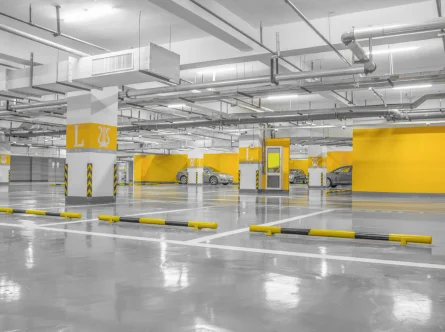
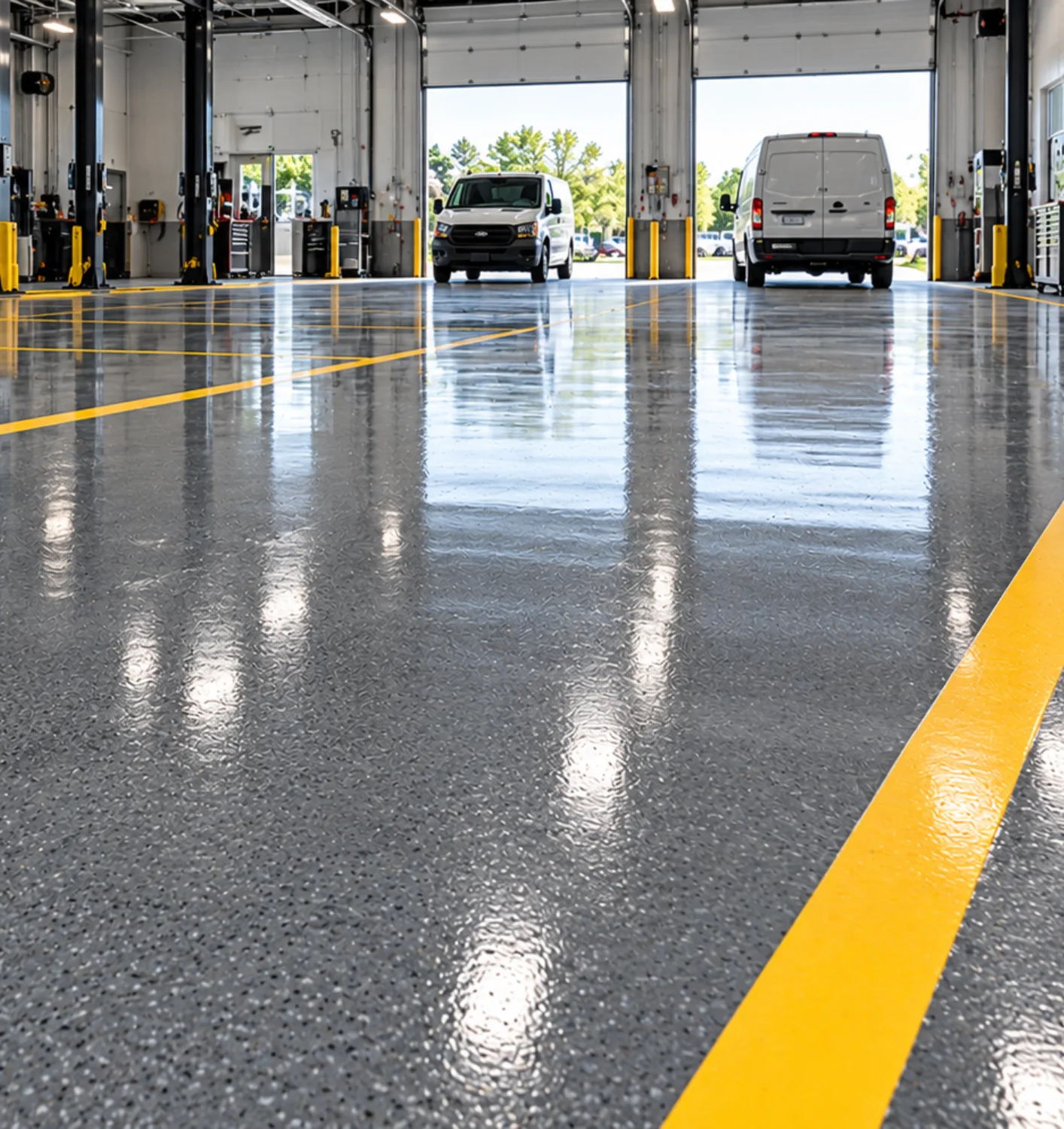
A residential two-car garage sees light, intermittent traffic. A commercial garage - whether it's a fleet maintenance bay, a multi-tenant parking structure, or a dealership service floor - sees constant vehicle movement, heavier loads, and far more aggressive chemical exposure from oil, transmission fluid, brake cleaner, and de-icing salt tracked in by dozens or hundreds of vehicles a day. A coating specified for a homeowner's garage simply isn't built to survive that volume.
Downtime is the variable that changes everything for a commercial property. A homeowner can park in the driveway for a few days while a coating cures; a fleet operator or parking garage can't take a section offline without losing revenue or disrupting tenants. That's exactly why polyaspartic has become the standard recommendation for commercial garage applications in this region - it cures in a fraction of the time standard epoxy needs, which means less of the facility sits unusable during installation.
Chicago's climate adds another layer most commercial property managers don't think about until a coating starts failing. Vehicles tracking in road salt and slush for nearly half the year accelerate the same chemical and freeze-thaw breakdown that threatens any unsealed concrete surface in this region - and a commercial garage with dozens of vehicles cycling through daily concentrates that exposure far faster than a residential driveway ever would.







 847-770-5278