What Makes Epoxy the Best Garage Floor Coating
When homeowners start comparing garage floor coating options, epoxy consistently stands apart for a straightforward reason: it does not just sit on the surface — it becomes part of it. The chemical reaction between the resin and hardener creates a material that is harder, more impact-resistant, and more chemically inert than the concrete beneath it.
Here is what that means in practical terms:
Oil and chemical resistance. Motor oil, transmission fluid, antifreeze, gasoline, and road salt are no match for a properly installed epoxy garage floor. These substances bead on the surface and wipe away cleanly, rather than soaking into the slab and leaving permanent stains.
Moisture barrier. Concrete is porous. Without a protective concrete floor coating, moisture vapor rising through the slab creates a surface that never fully dries — leading to mold, efflorescence, and ongoing deterioration. Epoxy seals the slab completely.
Impact and abrasion resistance. Dropped tools, rolling jacks, and the weight of vehicles are daily realities in a garage. High-quality epoxy floor systems are engineered to absorb impact and resist abrasion without cracking, chipping, or dulling.
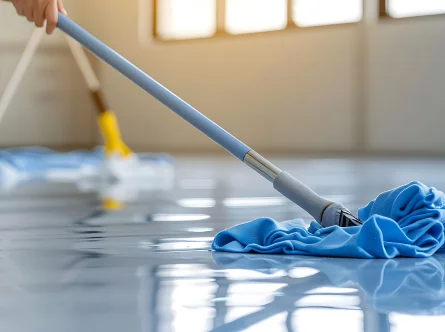
Ease of cleaning. A concrete garage floor coated with epoxy sweeps and mops clean in minutes. There is no dusting, no staining, and no need for specialty cleaners. Many homeowners report that their coated garage is cleaner than their kitchen floor — and they mean it.
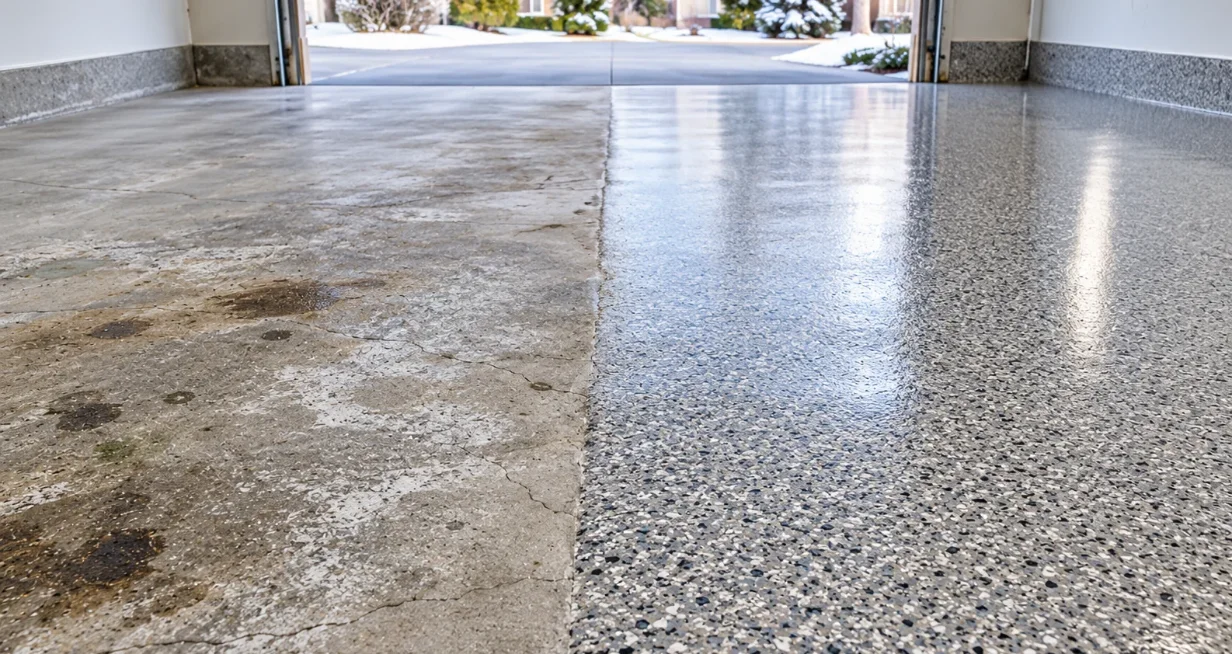
Visual transformation. Beyond performance, the right epoxy floor covering for garage spaces dramatically improves the look of the entire area. A flake finish, solid color system, or metallic epoxy floor in Aurora, IL turns a utilitarian concrete slab into a space that looks intentional, well-maintained, and genuinely impressive.
The Installation Process: How Professional Garage Floor Epoxy Works
Many homeowners have seen DIY epoxy kits at hardware stores and wondered whether a professional installation is really worth the difference in price. The answer lies almost entirely in what happens before the epoxy is applied.
Surface preparation — the most important step. Professional garage floor epoxy installers in Barrington, IL use diamond grinding equipment to mechanically profile the concrete surface. This process opens the pores of the slab, removes surface contaminants, grinds down high spots, and creates the surface texture that allows epoxy to bond at a molecular level. Without this step, even premium epoxy products will eventually peel, bubble, or delaminate — usually within a year or two.
Crack repair and moisture testing are also performed at this stage. Any existing damage to the slab is addressed before coating begins, and moisture vapor emission levels are measured to determine whether a moisture-blocking primer is required. Skipping this assessment is a common shortcut taken by lower-quality garage floor epoxy contractors — and it leads to predictable failures.
Primer coat. A penetrating primer is applied to seal the slab and begin the bonding process. In high-moisture environments — basements, garages on grade, or slabs with a history of water issues — a specialized moisture-mitigating primer is used. This step adds time and material cost, but it is what separates a durable garage floor coating from one that fails prematurely.
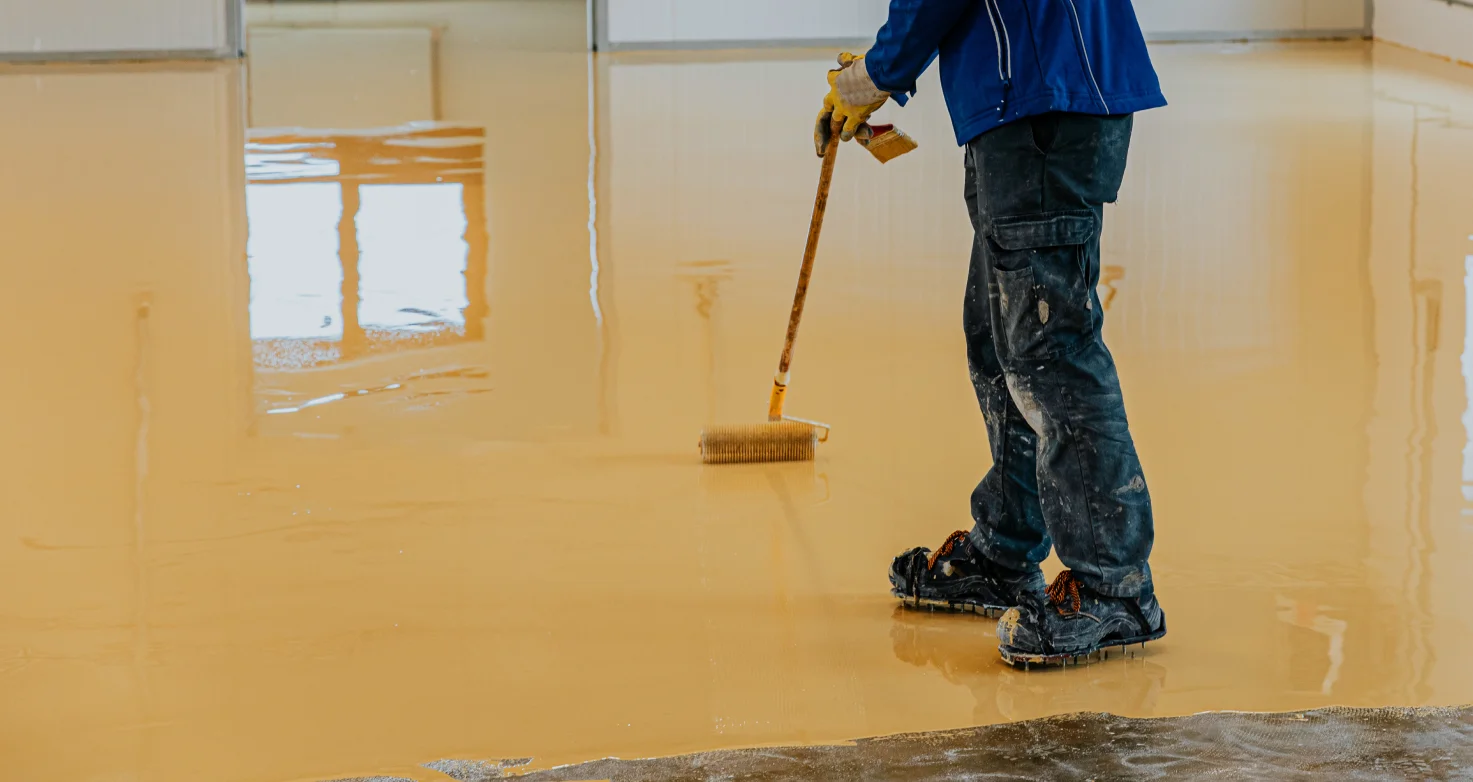
Base coat. The primary epoxy layer is applied across the prepared surface. Depending on the finish selected, decorative elements may be incorporated at this stage. The base coat determines the color, texture, and overall character of the finished floor.
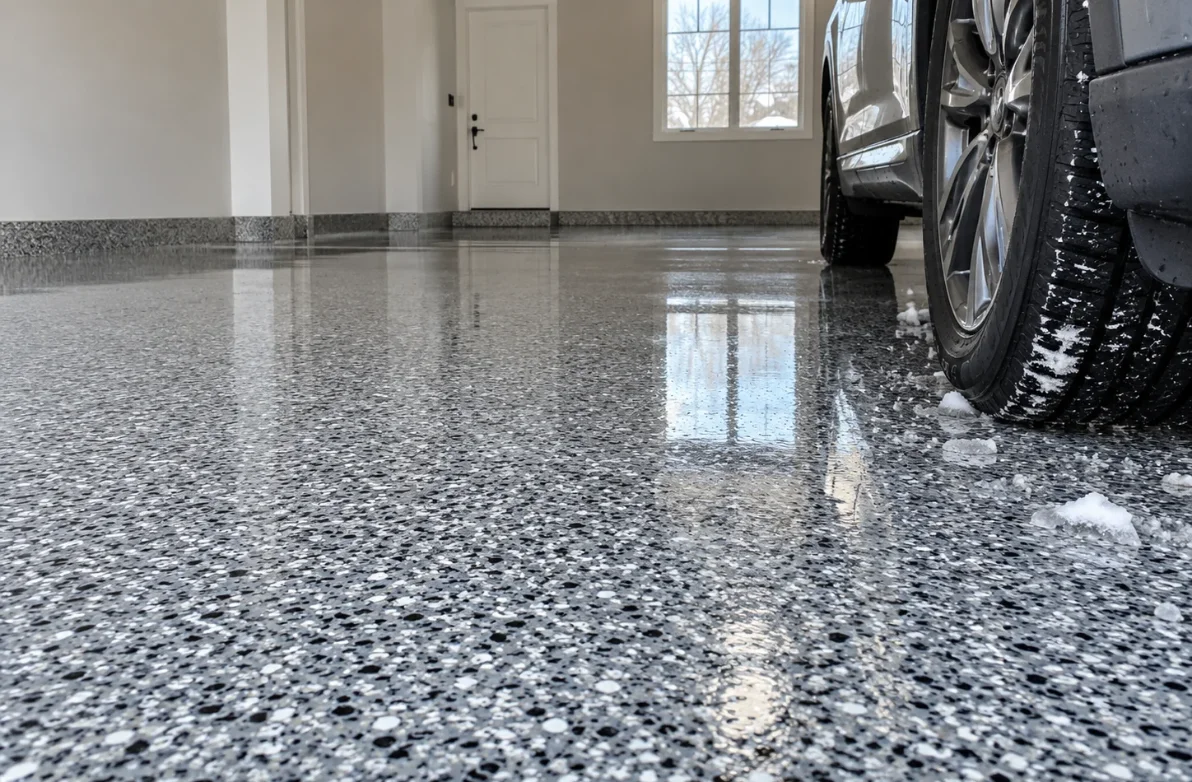
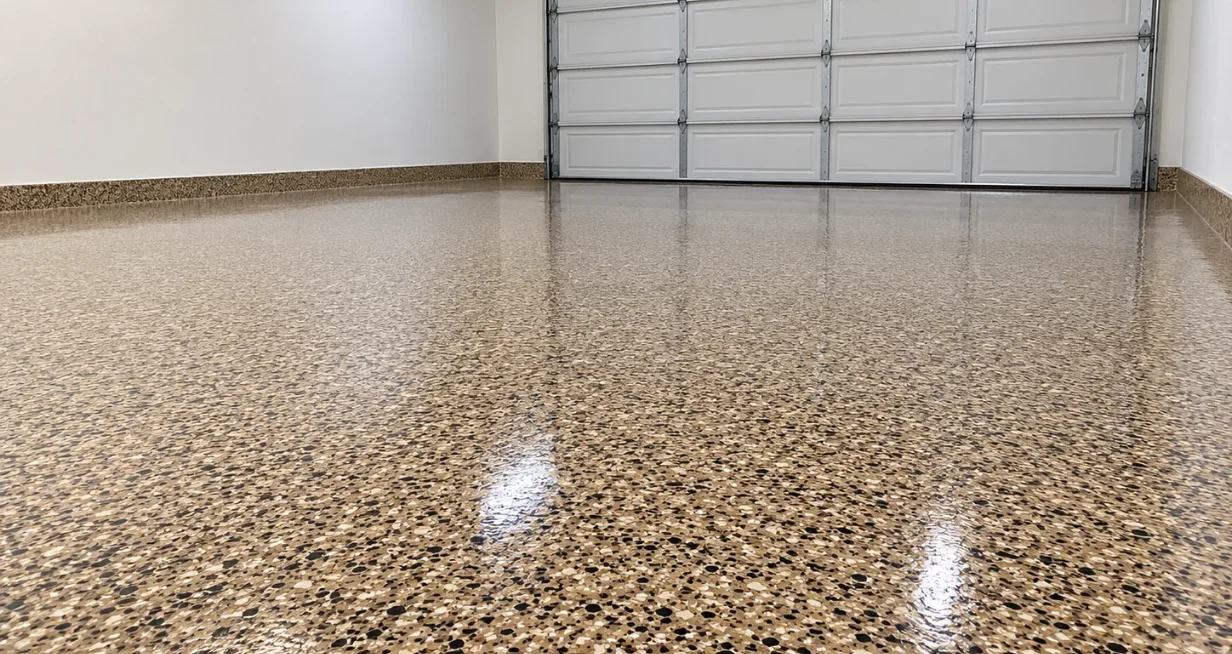
Decorative broadcast layer (for flake systems). For the popular flake garage floor finish, vinyl flake chips in the chosen color blend are broadcast into the wet base coat to full coverage. Once cured, the excess flake is removed and the surface is scraped smooth, creating a dense, textured appearance that closely resembles decorative stone or terrazzo. The flake epoxy garage floor is one of the most requested finishes because it hides minor surface imperfections, provides natural slip resistance, and holds up exceptionally well under heavy use.
Topcoat. A clear polyurethane or polyaspartic floor coating is applied as the final protective layer. This topcoat provides UV resistance, chemical resistance, and the surface hardness that makes the floor easy to clean. Polyaspartic coatings cure faster than traditional epoxy, often allowing a return to vehicle traffic within 24 hours — a significant advantage for homeowners who cannot afford extended downtime.
Choosing Your Garage Floor Finish
One of the most common questions from homeowners is: which finish is right for my garage? Here is a straightforward breakdown of the most popular options:
Solid color epoxy is clean, professional, and timeless. Available in dozens of colors from bright whites and light grays to deep charcoal and custom tones, solid color systems are easy to maintain and create a sleek, minimalist look. This is an excellent choice for homeowners who want a polished finish without visual complexity.
Flake garage floor systems are the most widely installed finish for residential garages. The vinyl flake broadcast creates a surface with natural visual depth, effective slip resistance, and outstanding ability to conceal dirt, tire marks, and minor wear between cleanings. Available in hundreds of color blends, a flake concrete floor can be customized to complement any home's color palette.
Metallic epoxy floors are the premium option for homeowners who want something truly distinctive. Metallic pigments suspended in the epoxy create swirling, three-dimensional effects that resemble polished stone, liquid metal, or flowing water. No two metallic floors are identical. This is a popular choice for showcase garages, home gyms, and spaces where the floor is meant to be a design feature in its own right.
Polyaspartic and polyurea systems offer faster cure times and superior UV resistance compared to standard epoxy. Polyurea garage floor coatings are among the most durable options available — harder than traditional epoxy and highly resistant to thermal shock, chemicals, and abrasion. For homeowners in climates with extreme temperature swings, polyurea floor coating systems are often the best long-term investment.
Understanding Garage Floor Epoxy Cost
Garage floor epoxy cost is one of the most searched questions among homeowners considering this upgrade — and understandably so. The honest answer is that pricing varies based on several factors:
Square footage. Larger garages naturally cost more to coat. The cost to epoxy a 2 car garage is typically lower per square foot than a single-car garage due to economies of scale. A 3 car garage floor epoxy cost will be higher in total but competitive on a per-square-foot basis.
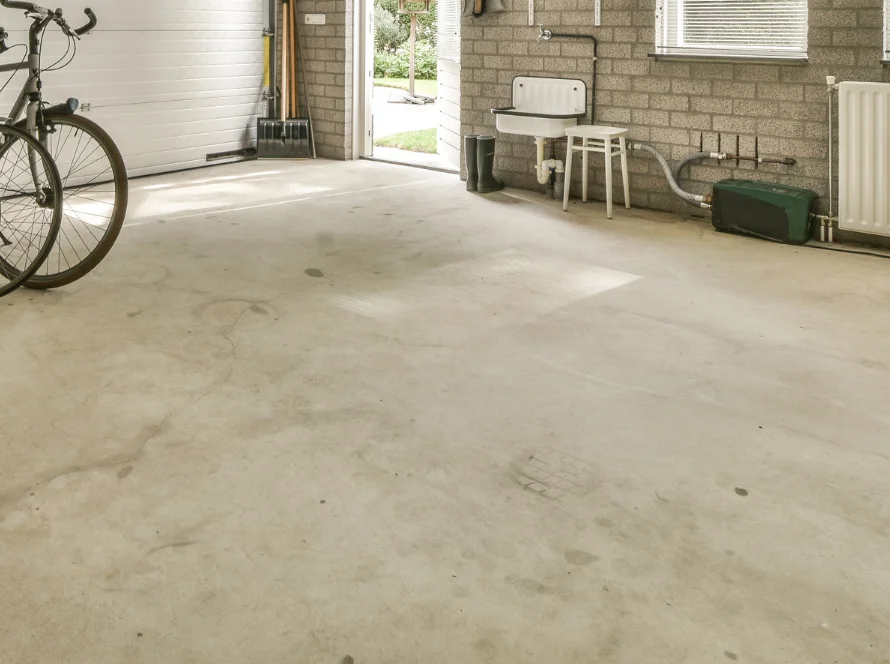
Concrete condition. A slab with significant cracking, previous coatings, moisture issues, or heavy contamination requires more preparation work. This adds time and cost, but it is necessary for a result that lasts.
Finish selected. Solid color systems carry the lowest material cost. Flake systems are mid-range. Metallic and custom decorative systems require more skilled labor and premium materials, and are priced accordingly.
Topcoat selection. Standard polyurethane topcoats are cost-effective. Polyaspartic floor coating and polyurea concrete coating systems cost more but offer faster cure times and enhanced performance characteristics.
What is consistent across all reputable garage floor epoxy companies is that a proper, professional installation costs more than a DIY kit — and delivers dramatically better results. The longevity of a professionally installed epoxy floor coating makes it one of the most cost-effective home improvements available when measured over a 10- to 20-year period.