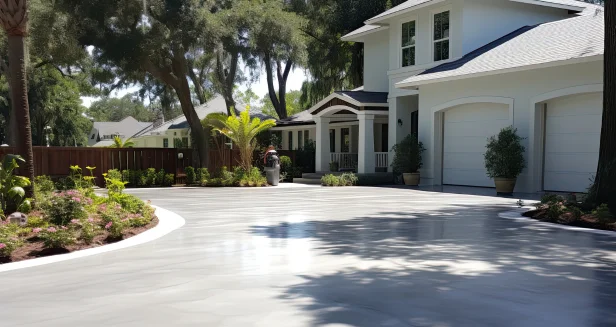
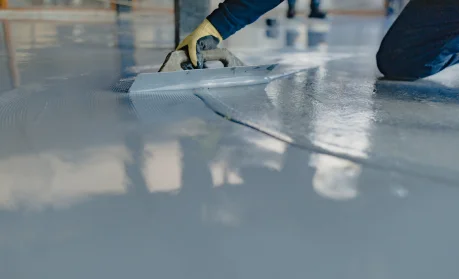
Altrus installs outdoor concrete coatings engineered specifically for that range - polyaspartic and epoxy systems formulated to flex with the slab instead of fighting it.
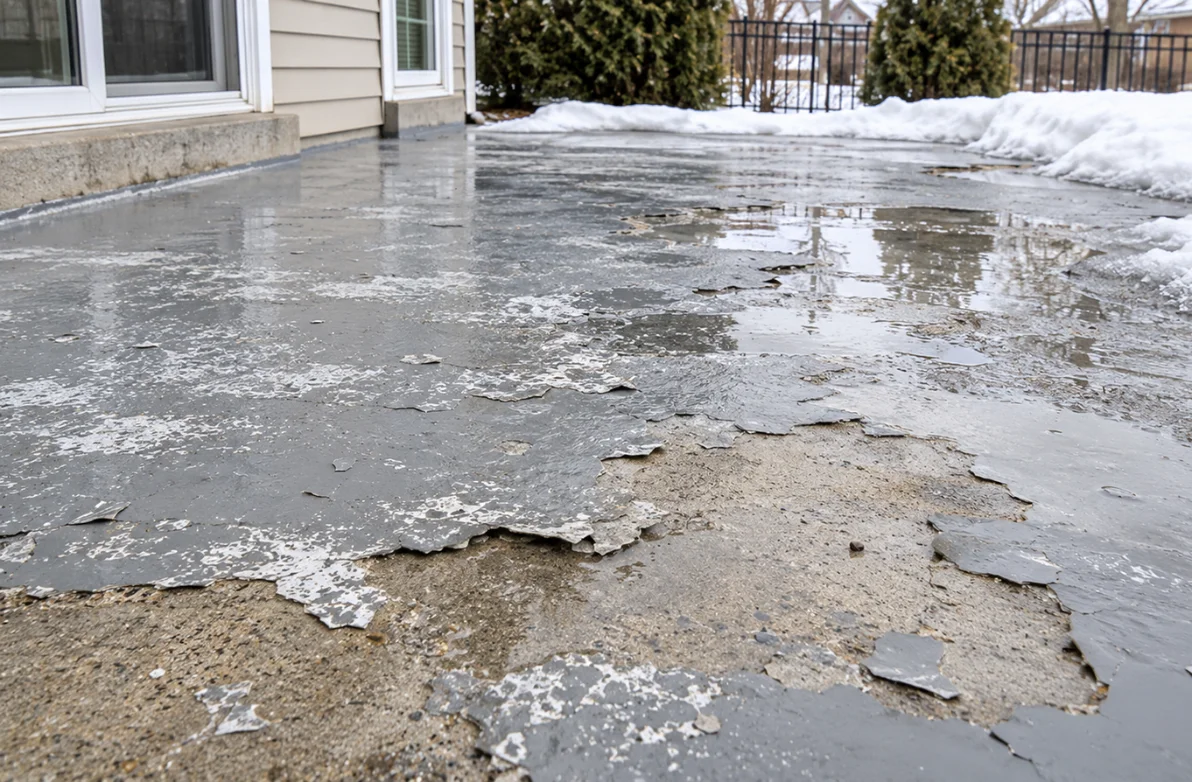
Chicago patios go through something most flooring systems were never built to survive: a winter freeze-thaw cycle that, across the Great Lakes region, averages roughly 42 crossings of the freezing point per year, with some seasons running well above that. Each crossing is a separate stress event on anything sitting on the slab surface, followed by a summer of direct UV exposure and pool chemical splash. Standard concrete coating patio products applied without that cycle in mind crack, peel, or chalk within two or three seasons. Altrus installs outdoor concrete coatings engineered specifically for that range - polyaspartic and epoxy systems formulated to flex with the slab instead of fighting it.
Lake Michigan's moderating effect does not eliminate freeze-thaw stress in Cook County - it concentrates it into a narrower, more volatile band. Temperatures swing above and below freezing repeatedly through late fall and early spring rather than settling into one hard freeze, and that repetition is what damages a coating, not the cold itself. Water that gets beneath a thin or poorly bonded exterior concrete epoxy layer expands roughly 9% in volume the moment it freezes, and that expansion pushes against the coating from underneath. A rigid coating with no flexibility cracks along the bond line. A coating with the wrong moisture-vapor permeability traps that water against the slab, and the freeze-thaw pressure builds with every cycle until the surface delaminates in sheets.
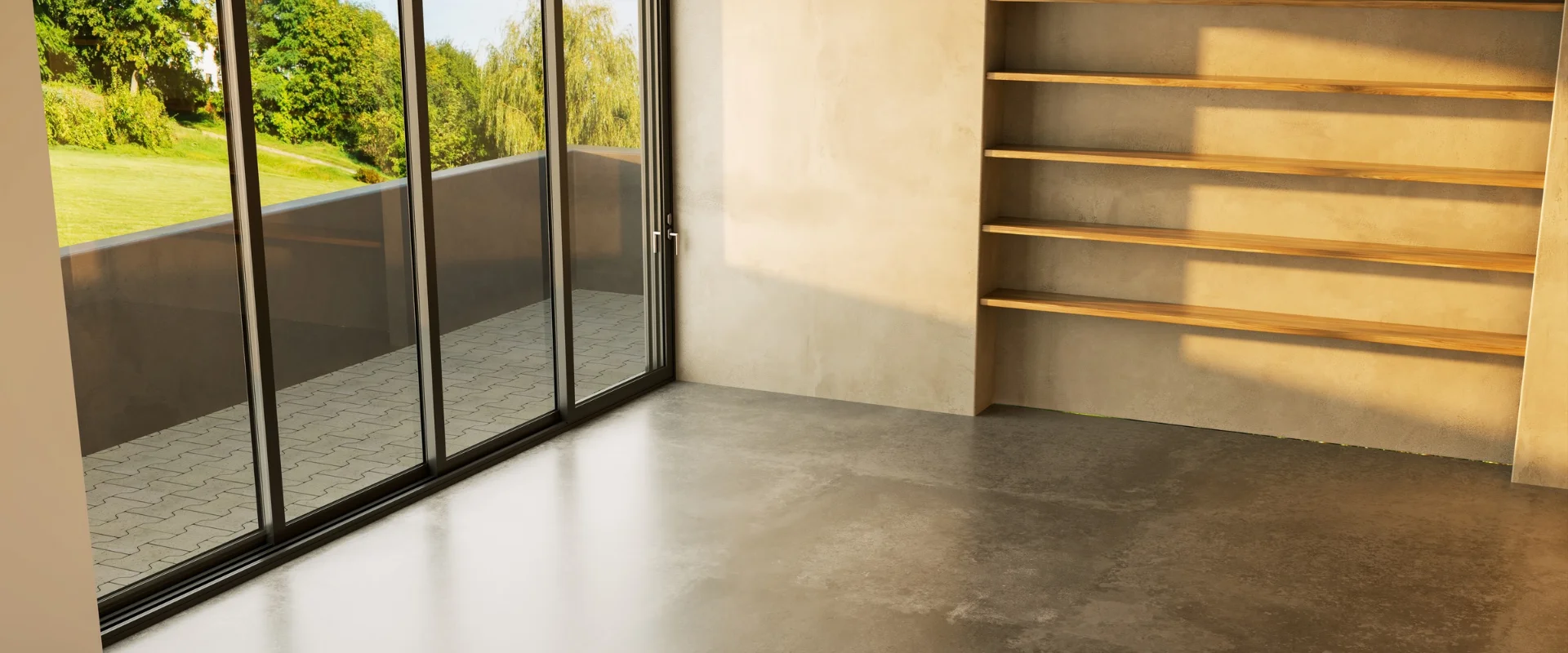
This is also why generic epoxy for exterior concrete sold in big-box stores tends to fail outdoors even when the same product works fine for
epoxy coating garage floor projects indoors. Garage slabs are conditioned and dry. Patios sit exposed to rain, snowmelt, and sprinkler runoff every day, and the coating has to manage moisture vapor transmission in both directions while still resisting UV breakdown on the surface.





 847-770-5278