Epoxy Stained Concrete and Sealing Systems — What Actually Protects a Slab
What Concrete Sealing Actually Does
Why This Matters More in the Chicago Climate
Bare concrete is porous by nature, which means water, oil, and de-icing chemicals don't just sit on the surface - they soak in. Once moisture is inside the slab, it expands when it freezes, drives staining from the inside out, and slowly breaks down the concrete's surface integrity year after year. A proper sealing system closes that porosity at the surface, giving water, chemicals, and stains nowhere to penetrate in the first place.
Chicago's freeze-thaw cycle turns ordinary moisture absorption into a much bigger problem than it would be in a milder climate. Water trapped inside unsealed concrete expands roughly 9% in volume the moment it freezes, and that expansion repeats dozens of times each winter as temperatures swing above and below the freezing point. Sealed concrete simply doesn't let that water in to begin with, which is why a correctly sealed slab in this region lasts measurably longer than an unsealed one exposed to the same conditions.
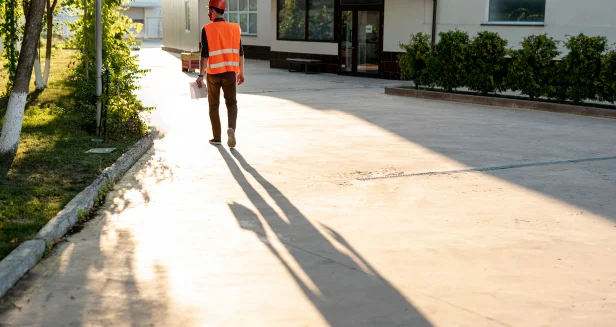
This is exactly why Altrus treats sealing as a structural decision, not a cosmetic one. Garage floors, patios, and walkways throughout Lake County and the North Shore take on road salt, snowmelt, and repeated freeze-thaw stress every winter, and a sealed surface is what stands between that exposure and a slab that's slowly losing integrity beneath the surface.







 847-770-5278